
 Analysis by Gamescozy
I like puzzle games that make a small action feel consequential: you try a move, see what changes, and decide whether to adjust or start over. Royal Smash! is a casual puzzle game built around that quick, repeatable appeal. It is free to play, and its simple premise makes it easy to approach when I have a few spare minutes rather than a whole evening to commit.
One move is enough to get started
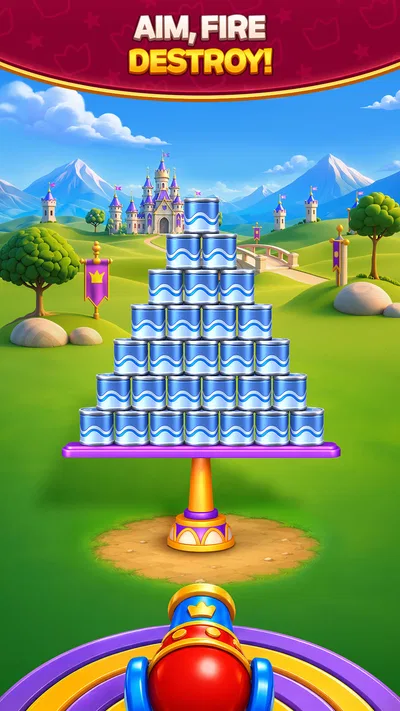
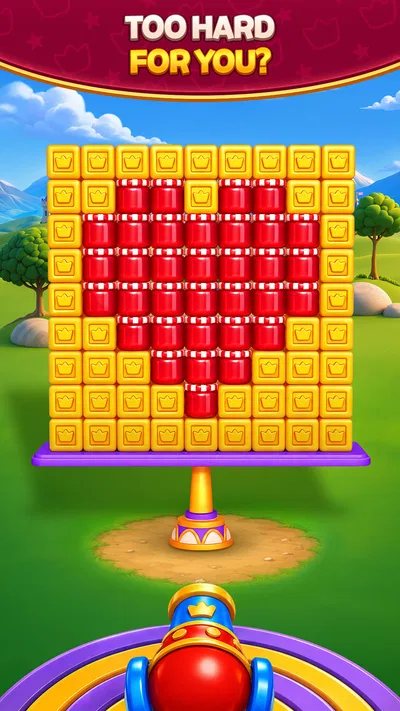
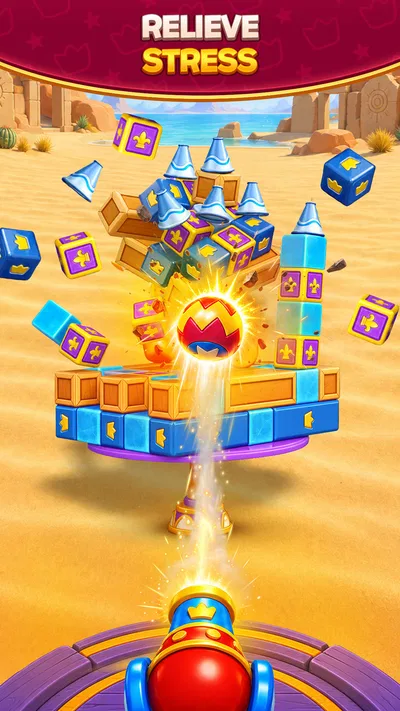
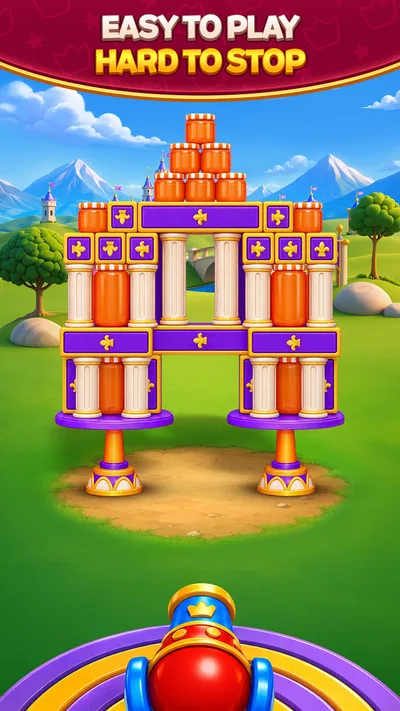
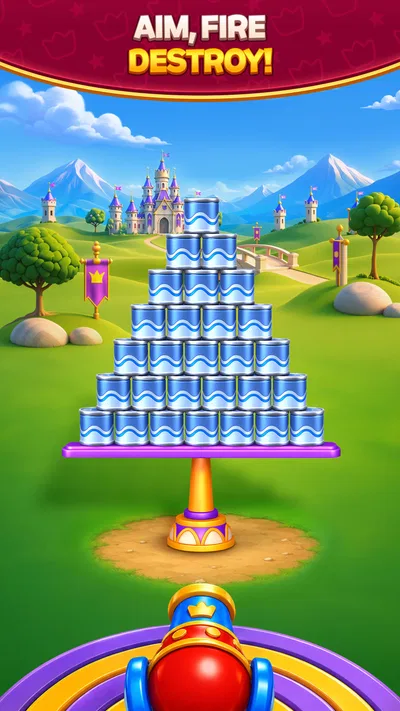
The first thing I value in a puzzle game is how quickly I can understand what it wants from me. Royal Smash! presents itself as a physics puzzle, so the central pleasure is not memorizing a long list of commands; it is working out how an action affects the situation on screen. That makes each attempt feel like a compact experiment: act, watch the result, and decide what to change.
That format suits short breaks particularly well. I can open the game while waiting for a kettle to boil or during a quiet moment between tasks, focus on a puzzle, and put it down without needing to remember a complicated story or a long-running plan. Its casual design is a better fit for stop-and-start play than for someone looking for a deep campaign that demands a sustained block of attention.
The useful mindset is to treat a first move as a test, not as a commitment. If the result is unexpected, I can learn from the outcome rather than assuming I have already failed. In a physics puzzle, cause and effect are the point: noticing what moved, what stayed put, and what changed gives the next attempt a purpose. That small shift makes trial and error feel more like problem-solving.
There is also a trade-off here. Players who prefer to plan every step with certainty may find a physics-based challenge less satisfying, because the appeal depends on observing outcomes rather than following a fixed recipe. If I want a puzzle where every clue is explicit and the correct sequence can be reasoned out before acting, a more traditional logic game may be a better choice.
How the feedback keeps a puzzle moving
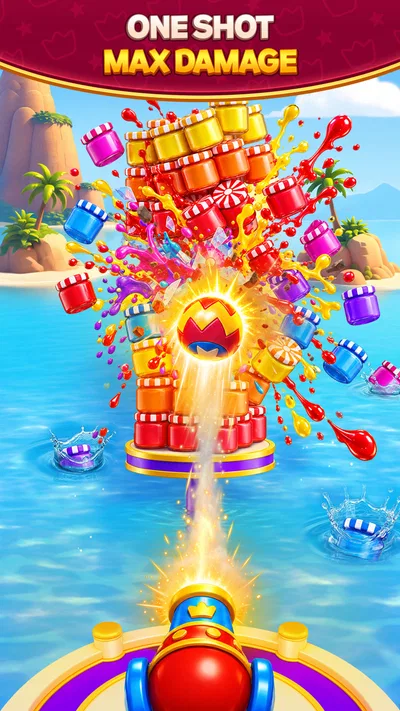
The most useful rhythm in a game like this is action followed by clear feedback. I want to be able to tell whether a move helped, whether it created a new problem, or whether I should try a different approach. When that loop is easy to read, even a failed attempt can be worthwhile because it narrows down what might work next.
My practical tip is to change one thing at a time. If I alter several decisions between attempts, it becomes harder to tell which one made the difference. A small adjustment gives me a cleaner comparison: the same basic idea, with one changed choice. That approach is especially helpful when I am playing casually and do not want to turn a short puzzle into a long, unfocused sequence of guesses.
Another useful habit is to pause briefly after an outcome rather than tapping through immediately. The result may reveal a relationship between objects or actions that was not obvious beforehand. Taking a moment to notice that relationship can save attempts and makes the puzzle feel more like an investigation than a reflex test. I would not expect every puzzle to reward the same tactic, but careful observation is a sensible starting point.
This is where Royal Smash! differs from word puzzles or number grids. Those usually reward spotting a pattern in symbols; a physics puzzle asks me to think about consequences in a changing scene. If I enjoy experimenting and adapting, that distinction is refreshing. If I find unpredictable outcomes irritating, the same quality may be the game's main source of friction.
What makes another attempt feel worthwhile
The reward in a compact puzzle loop is not only reaching a successful outcome. It is also the moment when an idea finally makes sense: I see why an earlier attempt went wrong and can act with a clearer plan. That kind of small, immediate payoff is a good reason to play another round, especially when I am not in the mood for a sprawling game with several systems to manage.
Royal Smash! is a free game from Cypher Games, which lowers the barrier to trying it. The broader audience is reflected in its Everyone content rating, while the store identifies it as a casual game. It has a 4.6 average from around 454,000 ratings and more than 10 million installs. Those figures suggest that it has reached a large audience, but I would still judge it by whether its trial-and-response style suits my own patience.
Free does not mean there is no spending consideration. The game offers in-app purchases, with individual items ranging from $0.99 to $399.99. That is a very wide span, so I would check the purchase screen carefully and avoid treating any optional purchase as necessary just because I am stuck or eager to move on. Players who prefer a completely purchase-free experience should take that into account before settling in.
The useful question is not simply whether spending exists, but whether I can enjoy the basic puzzle loop without feeling pressured to spend. I would approach each challenge on its own terms first: observe the outcome, revise the plan, and decide whether the puzzle is still enjoyable. If a purchase starts to feel like the only satisfying answer, that is a good moment to step away rather than letting impatience make the decision.
Resetting without turning play into a chore
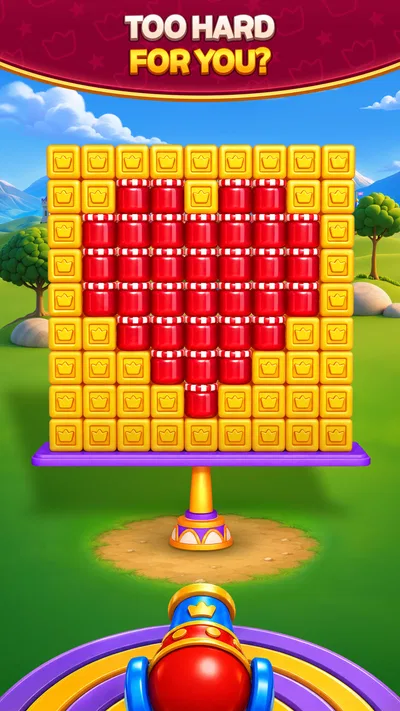
A reset is valuable when it gives me a clean chance to try a better idea. In short puzzle sessions, restarting can be part of the fun because the cost of an attempt is limited: I learn something, adjust, and return to the same problem with more information. The loop works best when I keep a simple mental note of what the previous move taught me instead of repeating it unchanged.
For everyday use, I would treat the game as a handful of focused attempts rather than an obligation to clear a long stretch in one sitting. That makes it easier to stop while I am still enjoying the challenge. If I notice myself making the same move repeatedly without paying attention to the result, I am no longer learning from the puzzle; a short break is more useful than another automatic restart.
The reset cycle also explains why the game may appeal to different moods. When I have only a minute, I can try a quick idea and leave. When I have a little more time, I can pay closer attention to the feedback and refine my approach. That flexibility is a practical strength for a casual game, though players who want a strong sense of progression or a detailed narrative may find the puzzle-by-puzzle focus too narrow.
For the smoothest start, I would make sure my device meets the listed minimum operating-system requirement of Android 7.0 or later. The current version is 1.18.737, and the game was released on June 24, 2026. Those details are useful when checking compatibility, particularly if I am installing it on an older phone or tablet rather than a recently updated device.
Who should keep it installed
I would recommend Royal Smash! to someone who likes short challenges, enjoys learning from an unsuccessful attempt, and wants a puzzle game that does not require a long warm-up. It is also a reasonable pick for casual play between other activities, provided the player is comfortable with experimenting instead of expecting every solution to be obvious at first glance.
I would skip it if I strongly dislike trial and error, want a puzzle game centered on words or fixed logic clues, or prefer a purchase-free environment with no in-app offers. In those cases, a conventional logic puzzler may feel more controlled, while a fully paid game may be more appealing to someone who wants to avoid optional spending prompts. The right alternative depends on whether I want predictable deduction or hands-on experimentation.
Overall, Royal Smash! has an appealing reason to begin another session: one action produces feedback, feedback suggests a new approach, and a fresh attempt gives me a chance to test it. Its casual format makes that loop easy to fit into ordinary spare moments, while the physics-puzzle style asks for patience and attention to consequences. I would give it a try if that sounds satisfying, keep purchases deliberate, and stop when repetition stops teaching me anything.